
Jungle Book story
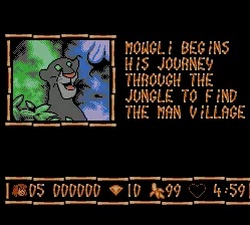
This story smells like warm plastic and crinkly market wrap. Someone had a VHS of the 1967 cartoon at home, and right next to it—a cartridge where the same button‑eyed kid swings through vines and pelts the sly Kaa with fruit. That’s how The Jungle Book wandered onto our carpeted floors and into the weekend backlog. The game landed at a moment when it felt like the jungle could sing, and 8‑bit melodies could dance. For us, it was the Jungle Book in a pocket cart: power on—and you’re instantly in the hum of green canopy, where time is measured in jump‑and‑run, and far off the striped tail of Shere Khan flicks a dare.
How The Jungle Book made it onto a cartridge
Behind Jungle Book stood a team trained up on Disney platformers. After Aladdin hit big, Virgin Interactive doubled down on animated tie‑ins, and Eurocom in the UK took on the NES version. Their approach wasn’t dry math—it was love for the source: Baloo had to feel like Baloo, Bagheera like that stern shadow you half‑remember, and Mowgli’s footwork like a tiny adventure, not a sprite on a conveyor. The NES release arrived in 1994, just as trends were marching on, but the team seemed determined to prove one thing: 8‑bit Disney could still smirk in the corner of a pixel—and that grin was contagious.
The cart’s musical soul came from Neil Baldwin. His NES score isn’t just chiptune—it’s sly winks at The Bare Necessities and other woven Jungle Book themes. He doesn’t quote outright; he whispers across two or three channels, and somehow your fingers find the jump rhythm on their own. You hear the elephants’ parade, the lazy sun over the river, and that bracing “let’s go” without which a Disney platformer doesn’t come alive. Every time a new scene kicks in, you feel it: the music doesn’t accompany—it leads.
How Mowgli reached us
Not everyone saw an official box, but the “NES version” found the market stalls fast. On the counter sat a Dendy (a Famicom clone), and beside it a tape‑wrapped stack of wonders: “8 in 1”, “1999 in 1”, always with that familiar grin peeking out. Stickers called it different things: “Disney’s The Jungle Book”, “Mowgli”, sometimes even a cuddly “Jangl Buk”. Names didn’t matter when the seller flipped the demo toggle and the jungle’s green glow filled the CRT. For many, it was the first “platformer on Dendy” where you weren’t just running—you were stepping back into the film, only this time there was no stop button.
The game spread not by press releases but by retellings: “there’s a Kaa stage—don’t fall for the hypnosis,” “King Louie’s groove will get your feet moving,” “the last sprint to Shere Khan—oof.” That’s how Jungle Book slipped into schoolyard folklore, right next to “how to beat Kaa’s level” and “where the extra life is hidden.” Neighbors would drop by “for one level,” and leave only when Mowgli was soaring vine to vine—like the whole room was humming along.
Why we loved it
The secret is, The Jungle Book never tried to be a stunt show. It was about place: damp wind, deep shade, fruit that chimed into points, and careful footing on slick logs. It’s a platformer you feel rather than explain. It’s easy to believe Baloo is a true friend, and Bagheera is quietly coaching from the edge of the screen: don’t rush—listen. Even “just” collecting turned into a ritual of hunting small joys, and every run‑in with a familiar face sparked that “oh, I remember!”—the spark that brings you back to a movie game years later.
Offscreen was the invisible work of people who knew how to tease emotion out of pixels. Eurocom wove neat set pieces into the fabric of levels, Virgin Interactive got the cart onto shelves, and we brought our imagination. That’s how Mowgli became part of “8‑bit Disney”: not a genre, a state of mind—dinner’s simmering in the kitchen, dusk presses at the window, and somewhere in a drawer a familiar cart is waiting.
Years rolled on, screens and habits changed, but that Jungle Book stayed in memory like a hint: it’s easy to recall the cadence of a jump, hear a sly trill from the soundtrack, and smile again when the striped shadow slips into the finale. It reached us by every shortcut—pirate multicarts, kiosks by the subway, a friend lending a console for the day—and in the end it settled where the best things live. In a folder we each label our own way: for some “Mowgli,” for others “The Jungle Book,” and some still say it in English—Jungle Book—as if it’s the password to those endlessly warm jungles.